Amazon MGM Tests AI Tools for Film and TV Production
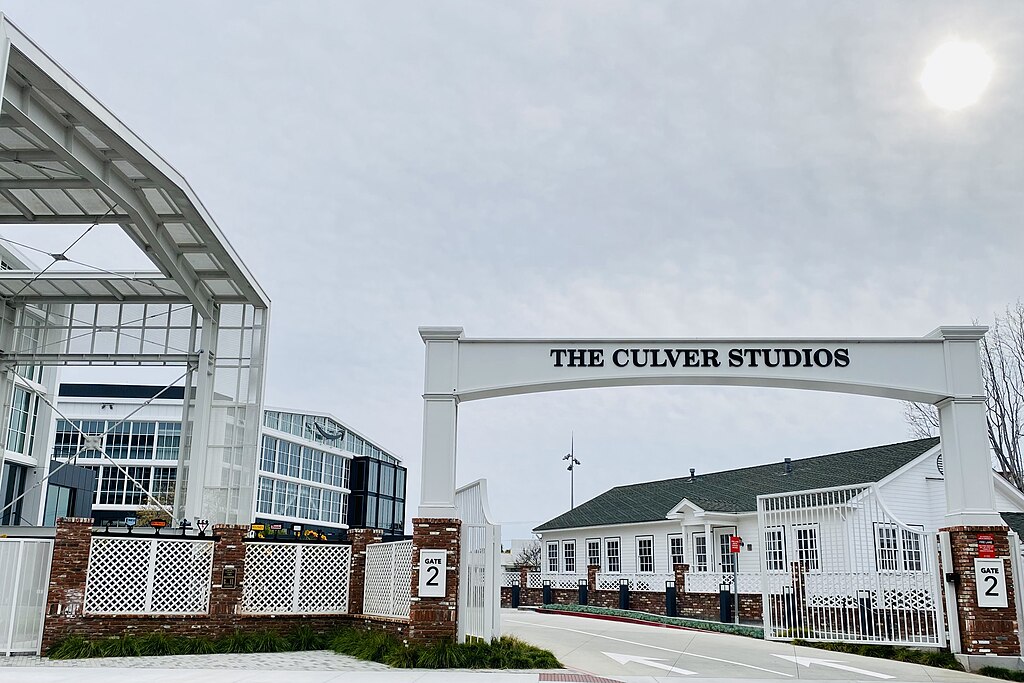
Jengod, CC BY-SA 4.0, via Wikimedia Commons
Share this post:
Amazon MGM Tests AI Tools for Film and TV Production
Amazon MGM Studios is set to begin closed beta testing of its proprietary AI production tools in March 2026, with initial results expected by May. The move marks a concrete escalation in Hollywood's use of AI across the full production pipeline, from early pre-visualization to post-production VFX work.
What the Tools Do
The platform, built under an internal unit called AI Studio, focuses on three primary areas: maintaining character consistency across shots, accelerating pre-production workflows, and supporting visual effects pipelines. The system runs on Amazon Web Services infrastructure and draws on external large language model providers to strengthen its output.
Albert Cheng, Chief Digital Officer at Amazon MGM Studios, has led AI Studio since its creation in the summer of 2025. The unit operates with a mandate to protect the integrity of Amazon's intellectual property while giving production teams faster access to AI assisted tools across the content development cycle.
House of David: The First Large Scale Test
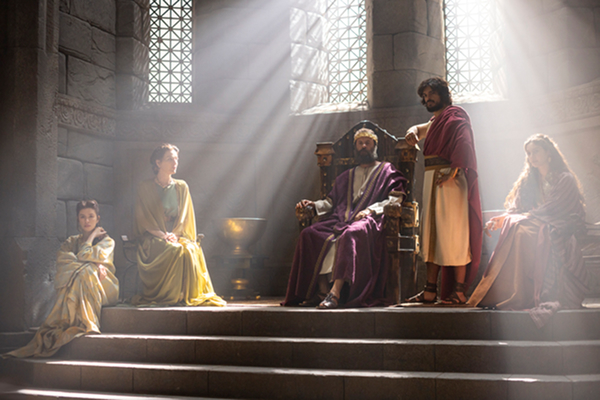
Amazon's biblical epic House of David has already served as the most concrete proof of concept for the studio's AI ambitions. Season 2 of the series incorporated roughly 350 AI generated shots, relying on these tools for scenes that would have required either extensive traditional VFX work or logistically difficult on-set resources.

The scale of that integration, hundreds of shots across a single season, signals that Amazon is treating these tools as part of standard production rather than an experimental add-on. The closed beta is intended to test whether that approach can be formalized and extended to other projects across the studio's slate.
The Creative Team Shaping Deployment
Amazon has enlisted a group of established industry figures to help refine how the tools are used on real productions. Robert Stromberg, the production designer and director behind Maleficent, brings experience at the intersection of physical and digital filmmaking. Kunal Nayyar, known for The Big Bang Theory, and Colin Brady, a former Pixar animator, round out a team whose backgrounds span performance, animation, and large-scale studio production.
Their involvement points to a deliberate strategy. Rather than testing the tools in isolation with engineers, Amazon is shaping deployment through working creatives. The goal is to ensure these capabilities fit within existing production workflows, rather than forcing crews to adapt around new systems.
Hollywood's Broader AI Shift
Amazon is not alone in this direction. Netflix used generative AI to complete a building collapse sequence in The Eternaut, rendering the complex visual effects work ten times faster than conventional methods. Netflix co-CEO Ted Sarandos has framed the technology as a tool to boost creativity, not just reduce production costs.
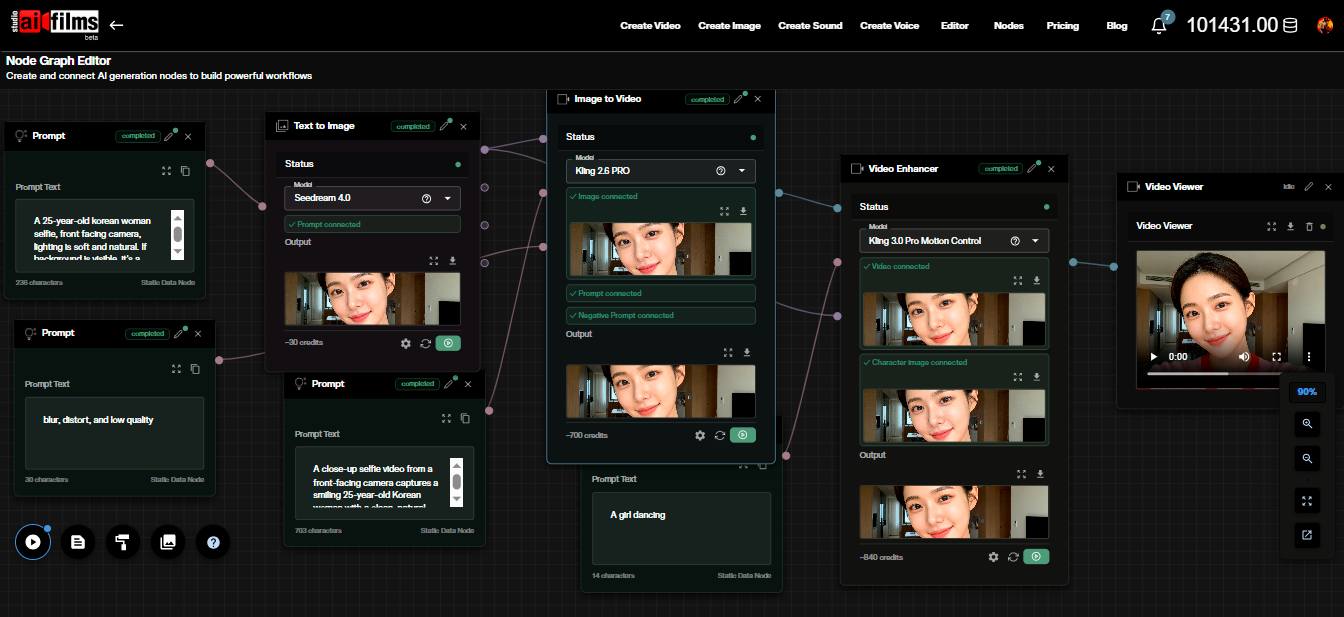
The convergence of major studios testing AI at the production level, within the same 12 month window, suggests this is moving from isolated experiment to standard practice faster than many anticipated. Independent filmmakers and smaller productions can access comparable text-to-video and image-to-video capabilities through AI FILMS Studio, without the overhead of an in-house AI unit.
Jobs, Labor, and the Stakes
Amazon's official position is that these tools are designed to assist creative teams, not replace them. That framing, however, sits alongside a pattern that has drawn scrutiny. The company has repeatedly cited AI progress when announcing staff reductions, raising questions about where the line between augmentation and displacement sits in practice.
The issue extends across the industry. Guild negotiations have increasingly focused on how AI tools are credited, how likeness rights are protected, and whether residual structures established for human labor apply when AI takes on portions of the work. The beta results Amazon expects by May 2026 will be watched closely by SAG-AFTRA and the WGA, both of which secured AI provisions in their most recent contract cycles.
Not every major filmmaker is moving in the same direction. Steven Spielberg stated at SXSW 2026 that he has never used AI in any of his films and opposes AI that replaces creative individuals.
For a broader look at the investment wave driving these developments, see The Hollywood AI Studio Boom: A Breaking Point for Film.
Sources
Reuters | TechCrunch | Daily Star | Digital Watch Observatory | Economic Times
Continue Reading

Video & LipSync
- Video Generator
- Text to Video
- Image to Video
- Start-End Frame to Video
- Draw to Video
- Motion Control
- Video Enhancer
- Video Upscaler
- Video to Video LipSync
- Audio to Video LipSync
- Image to Video LipSync
- Video FaceSwap
- Seedance 2
- OpenAI Sora 2
- Kling 3.0
- Kling O1
- Google Veo 3.1
- LTX 2.3
- Kling O1
- Hailuo AI
- Luma Ray
- Kling 3.0 Motion
- Topaz Upscaler
- InfiniteTalk Face Swap